Friday, July 24, 2026From the news
Where God Weeps
In the face of a community's fear and grief over childhood cancer, we find a God who weeps with us and promises a future where our tears are wiped away.
Thus says the LORD: A voice is heard in Ramah, a lamentation, a bitter weeping! Rachel is weeping for her children; she refuses to be consoled for her children, because they are no more. ... There is hope for your future—oracle of the LORD.
Jeremiah 31:15, 17
And Jesus wept.
John 11:35
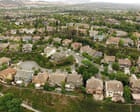
My dear friends in Christ, it is difficult to read the news from a community like Ladera Ranch in Southern California without our hearts growing heavy. We hear of families watching their precious children battle a rare and aggressive cancer. We hear their fear, their uncertainty, and their desperate search for answers. We read the words of a father, Brian Dalton, who, after losing his daughter Lily, said, “I don’t want another mother holding her child’s hand through endless treatments, praying for one more birthday, planning a funeral instead of a future.”
This cry is not a new one. It is a cry that echoes through salvation history. The prophet Jeremiah gives voice to this profound sorrow: “A voice is heard in Ramah, a lamentation, a bitter weeping! Rachel is weeping for her children; she refuses to be consoled for her children, because they are no more.” Rachel, the great matriarch, becomes the image of every parent who has ever grieved a child. Her sorrow is so deep that she refuses comfort. And the Lord does not rebuke her for it. He meets her in that raw and honest grief. He acknowledges the bitterness of her tears.
Where is God in Ladera Ranch? Where is God when a child is suffering? Where is God when parents are planning a funeral instead of a future? Our faith gives us a quiet, powerful, and deeply comforting answer. We find it in the shortest verse in all of Scripture, from the Gospel of John. As Jesus stands before the tomb of his friend Lazarus, seeing the grief of Mary and Martha, the Word tells us, “And Jesus wept.”
He did not offer a theological explanation for death. He did not immediately jump to the miracle he was about to perform. First, he entered into the sorrow of his friends. His heart was moved with theirs. He wept. This is our God. Not a distant, unfeeling force, but a God who became man, who took on our flesh, and who feels our pain so deeply that he weeps with us. He is weeping with the parents of Ladera Ranch. He is holding the hands of those children in their hospital beds. His heart breaks with theirs.
And after acknowledging the weeping, God speaks a word of gentle hope to Rachel, and to us. “There is hope for your future,” He promises. This is not an easy promise that erases present pain, but a steadfast assurance that suffering and death do not have the final say. It is the promise that finds its ultimate fulfillment in the resurrection of Jesus Christ, who transforms the tomb from a place of finality into a place of passage.
As a community of faith, we are called to be the presence of Christ to one another. We see this in the people of Ladera Ranch, gathering together, demanding action, and supporting each other. That is the Body of Christ in motion. Let us join them in solidarity. Let us hold these families in our prayers, asking the Lord to grant them His comfort, to bring healing to the sick, and to enfold the children who have gone before us, like young Lily, in His eternal and loving embrace. Take heart, for our God is not far from us. He is here, weeping with us, and holding us in His care.
Prayer
Merciful Father, we lift up to you the children and families of Ladera Ranch. Be their comfort in this time of fear and sorrow. We ask Mary, Health of the Sick, to intercede for them, and we pray for the repose of the souls of the children who have entered eternal life. Amen.